
What went wrong?
By Jim Dettore
(As previously published in Gas Compression Magazine)
Delve into the intricacies of problem discovery as we traverse the landscapes of innovation and craftsmanship to encounter the enigmatic failures of gas compression components — those silent setbacks that hold a wealth of lessons. Through careful analysis, the stories etched within these components are uncovered, each failure a chapter in the larger narrative of progress. Various factors will be illuminated, from manufacturing anomalies to environmental challenges and unforeseen operational stress. This column intends to offer a roadmap to navigate the intricate landscape of improvement.
In the realm of gas compression, where the harmonious interplay of machinery and precision orchestrates power, a single malfunction can echo across the industry. A recent enigma, involving a Caterpillar G3616 A3 engine’s connecting rod bearing failure, urged experts to decipher the tale concealed within fractures and wear patterns. The journey unfolded into an odyssey of meticulous analysis, unraveling the complex dance of components within a natural gas compression engine.
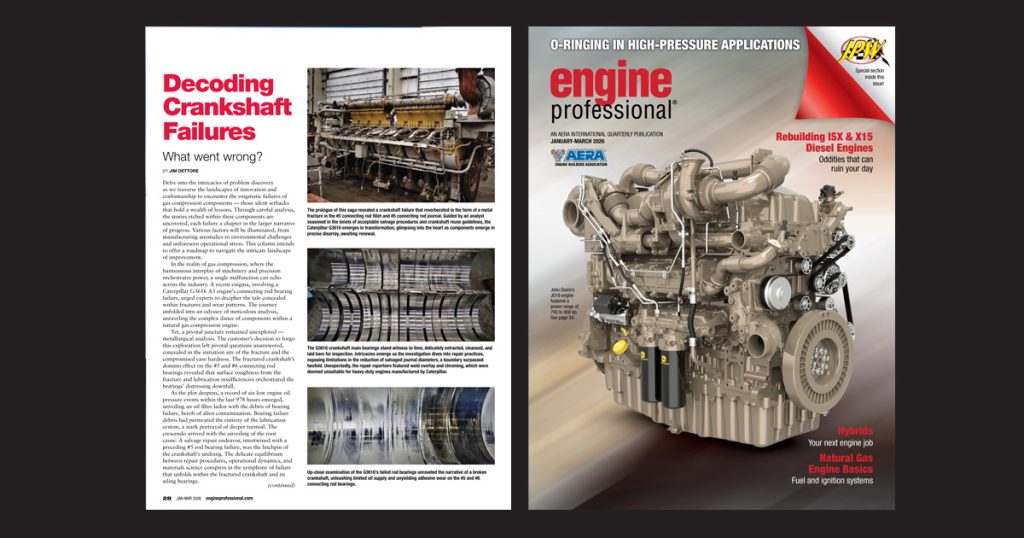
Read this article with all images in the digital issue of Engine Professional magazine https://engineprofessional.com/2026EPQ1/#p=30
Yet, a pivotal juncture remained unexplored — metallurgical analysis. The customer’s decision to forgo this exploration left pivotal questions unanswered, concealed in the initiation site of the fracture and the compromised case hardness. The fractured crankshaft’s domino effect on the #5 and #6 connecting rod bearings revealed that surface roughness from the fracture and lubrication insufficiencies orchestrated the bearings’ distressing downfall.
As the plot deepens, a record of six low engine oil pressure events within the last 978 hours emerged, unveiling an oil filter laden with the debris of bearing failure, bereft of alien contamination. Bearing failure debris had permeated the entirety of the lubrication system, a stark portrayal of deeper turmoil. The crescendo arrived with the unveiling of the root cause. A salvage repair endeavor, intertwined with a preceding #5 rod bearing failure, was the linchpin of the crankshaft’s undoing. The delicate equilibrium between repair procedures, operational dynamics, and materials science conspires in the symphony of failure that unfolds within the fractured crankshaft and its ailing bearings.
As the curtain falls on this tale, the gas compression industry contemplates a poignant narrative, a lesson in the labyrinthine nature of machinery. This tale, marked by meticulous scrutiny and a commitment to metallurgical exploration, underscores the essence of vigilance.
In this era of gas compression, the chronicles of the connecting rod bearing failure offer a reflection, a reminder that the machinery realm is as much an art as it is a science. With every fracture decoded and wear pattern examined, the industry gains a deeper understanding of its complex tapestry, ensuring a symphony of reliability amidst the power-driven crescendo of gas compression.
Read this article with all images in the digital issue of Engine Professional magazine https://engineprofessional.com/2026EPQ1/#p=30